Last updated 2026-08-14
When may your AI agent act alone?
The short answer
AI agents can act faster than people can review. The safe answer is not to remove human oversight, and not to drown a person in approvals either. It is an autonomy threshold: your agent acts alone only where its graded track record says it has earned it, and defers to a person everywhere else. Almanexa keeps that track record. The threshold stays yours.
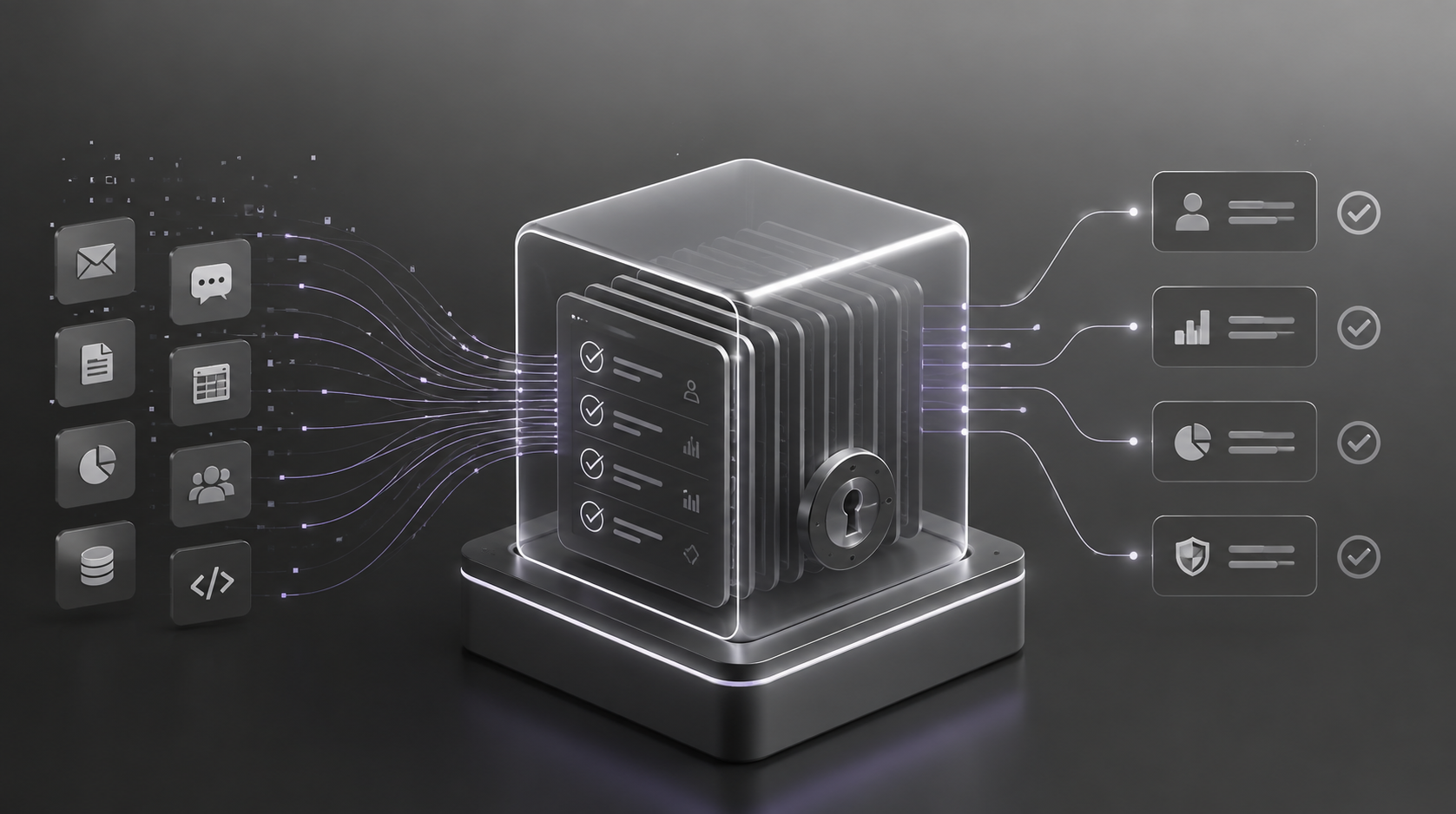
Human in the loop became the bottleneck
Machines took over the doing. What they did not take over is the deciding, so every action an agent wants to take still queues for a person. A reviewer facing two hundred queued approvals a day is not a control anymore, they are a formality: approvals get rubber-stamped, oversight exists on paper, and the one thing it was meant to protect, judgment, is exactly what disappears.
Removing the human entirely is unjustifiable. Keeping a human in the loop on every decision no longer scales. The way out is oversight that moves, based on evidence.
The agent asks before it acts
Your agent lives in your own systems, in whatever agent framework you already use, and it treats Almanexa as its decision engine. Before acting, it asks, and what it receives is deliberately narrow: only lessons your organization has approved, each with its source shown. When several AI models are consulted at once, the agent also receives a plain signal of how much they agreed, and a flag when they did not. Disagreement is a built-in reason to stop and involve a person.
Then the agent acts where it lives, in your stack. Almanexa never takes the action. It records it: the decision, the result the agent expected before the outcome existed, and later, what actually happened. Graded, every time.
The autonomy threshold, concretely
Now the track record exists, the question "when may this agent act alone?" gets an evidence-based answer instead of a mood-based one. You write the rule, in your own orchestration, and a realistic one reads like this: act alone only where we have enough graded history for this type of decision, recent accuracy is high, every lesson relied on is still approved, and the models did not disagree. Otherwise, ask a person, and record that too.
- Routine restocking, two hundred graded decisions, high recent accuracy: the agent runs alone.
- Changing a supplier, four graded decisions: that stays with a person.
- Same agent, different leash per decision type, and the leash is set by evidence.
Because the rule reads a recent window rather than a lifetime average, autonomy is lost automatically the moment accuracy decays or disagreement rises. Nobody has to remember to turn the agent off. And whichever way a decision went, acted alone or deferred, the audit trail answers the reviewer's question: why was the machine allowed to do this, and here is the history that justified it.
Guardrails you can show an auditor
Most agent guardrails are rules someone wrote about what an agent may touch. This is a different kind: a measured claim about where the agent has been right, and for how long. It is the difference between "we allowed it" and "here is why allowing it was reasonable, with the record to prove it".
Why the threshold is yours
Every agent's risk profile is different. A restocking agent and a pricing agent should not share a bar, and two organizations running the same agent should not either. That is why the threshold lives in your agent layer, where you control it, and the evidence lives in the engine, where nobody can quietly rewrite it. Richer support for agent oversight inside the engine is an open direction; the pattern described here stands entirely on what ships today.
See what decision memory is for the record this stands on, or start free and give your agent its first memory.
Questions we hear
- Does Almanexa decide for the agent?
- No. Almanexa serves the evidence: approved lessons with sources, the agent's graded history, and a disagreement signal. Your policy, in your own orchestration, decides when that evidence clears the bar.
- What happens when the agent starts being wrong?
- The threshold is computed from recent results, not lifetime averages. When accuracy decays or its advisors disagree, the same rule that granted independence withdraws it, automatically, and the person steps back in.
- What does an auditor see?
- The whole chain: what the agent decided, what it expected, which approved lessons it relied on, what actually happened, and the policy under which it was allowed to act. Whether the agent acted alone or deferred, the record answers for it.